
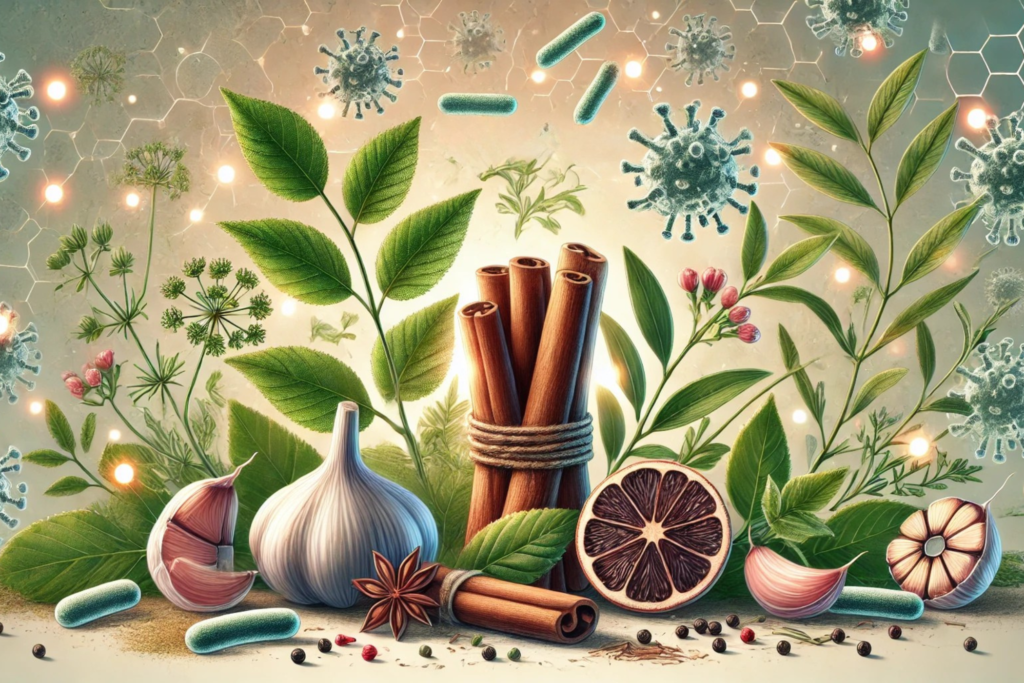
Antimicrobial resistance (AMR) is a growing global health crisis, with antibiotic-resistant bacteria rendering many conventional treatments ineffective. The widespread and sometimes indiscriminate use of antibiotics has accelerated resistance among bacterial pathogens, leading to the emergence of multidrug-resistant (MDR) strains. The World Health Organization (WHO) has classified AMR as one of the top 10 global public health threats, underscoring the urgent need for new therapeutic strategies.
Phytotherapy—using plant-based compounds for medicinal purposes—has gained attention due to its rich repository of bioactive molecules with antimicrobial properties. Many medicinal plants have been used for centuries to combat infections, and modern research is validating their efficacy through scientific studies.
Promising Plant-Based Antimicrobial Agents
1. Cinnamomum zeylanicum (Ceylon Cinnamon)
Cinnamon contains bioactive compounds such as cinnamaldehyde and eugenol, which exhibit strong antibacterial properties. Research has shown that cinnamon extracts effectively inhibit Staphylococcus aureus, Escherichia coli, and Pseudomonas aeruginosa by disrupting bacterial membranes and interfering with quorum sensing, the mechanism bacteria use for communication and virulence expression.
2. Berberine (Berberis spp.)
Berberine, an alkaloid found in Berberis species, has shown significant antimicrobial effects against Gram-positive and Gram-negative bacteria, including resistant strains. It inhibits bacterial DNA replication and efflux pump mechanisms, which are commonly associated with antibiotic resistance. Recent studies highlight its potential synergy with conventional antibiotics, reducing the required dosage and minimizing resistance development.
3. Garlic (Allium sativum)
Garlic has long been recognized for its antimicrobial properties, attributed mainly to allicin. This sulfur-containing compound has been shown to inhibit biofilm formation—a key factor in antibiotic resistance. It effectively combats Helicobacter pylori, Methicillin-resistant Staphylococcus aureus (MRSA), and Klebsiella pneumoniae, among others.
4. Oregano (Origanum vulgare)
Oregano essential oil, rich in carvacrol and thymol, has potent antibacterial activity. Studies indicate its effectiveness against multidrug-resistant Acinetobacter baumannii and Escherichia coli. Carvacrol has been found to disrupt bacterial cell walls, leading to increased permeability and cell death.
5. Tea Tree Oil (Melaleuca alternifolia)
Tea tree oil is a well-documented antimicrobial agent with activity against various bacteria and fungi. It has been widely used in dermatological applications and has shown promise in wound care by inhibiting MRSA and Streptococcus pyogenes.
Mechanisms of Action: How Do Plant-Based Antimicrobials Work?
Phytochemicals exhibit antimicrobial properties through multiple mechanisms, reducing the likelihood of resistance development. These are some of the most common mechanisms:
- Disrupting bacterial cell membranes – e.g., cinnamaldehyde and carvacrol.
- Inhibiting quorum sensing – preventing bacteria from coordinating infection-related behaviors.
- Blocking efflux pumps – preventing bacteria from expelling antibiotics and other harmful substances.
- Interfering with biofilm formation – reducing bacterial adhesion and persistence.
The Future: Integrating Phytotherapy in AMR Strategies
While plant-based antimicrobials show promise, there are challenges to their widespread use. Standardization of extracts, understanding effective dosages, and ensuring bioavailability are critical areas requiring further research. Additionally, regulatory approval for plant-based antimicrobials in clinical settings remains a hurdle.
Nonetheless, combining phytochemicals with conventional antibiotics may offer a powerful strategy in the fight against AMR. Synergistic effects can enhance antibiotic efficacy, reduce side effects, and slow the development of resistance.
REFERENCES
Ben Selma W, Ferjeni S, Farouk A, Marzouk M, Boukadida J. Antimicrobial activity of Cinnamomum zeylanicum essential oil against colistin-resistant gram-negative bacteria. Int J Environ Health Res. 2025 Jan;35(1):169-181.
Yu HH, Kim KJ, Cha JD, Kim HK, Lee YE, Choi NY, You YO. Antimicrobial activity of berberine alone and in combination with ampicillin or oxacillin against methicillin-resistant Staphylococcus aureus. J Med Food. 2005 Winter;8(4):454-61.
Bhatwalkar SB, Mondal R, Krishna SBN, Adam JK, Govender P, Anupam R. Antibacterial Properties of Organosulfur Compounds of Garlic (Allium sativum). Front Microbiol. 2021 Jul 27;12:613077.
Leyva-López N, Gutiérrez-Grijalva EP, Vazquez-Olivo G, Heredia JB. Essential Oils of Oregano: Biological Activity beyond Their Antimicrobial Properties. Molecules. 2017 Jun 14;22(6):989.
Wińska K, Mączka W, Łyczko J, Grabarczyk M, Czubaszek A, Szumny A. Essential Oils as Antimicrobial Agents-Myth or Real Alternative? Molecules. 2019 Jun 5;24(11):2130. doi: 10.3390/molecules24112130.