Phytotherapy has always thrived at the intersection of tradition and nature. Across centuries and continents, people have turned to plants for healing—not out of trend, but necessity and trust. Today, this ancient practice is undergoing a modern renaissance, shaped not just by folk wisdom, but by cutting-edge science, sustainability demands, and an evolving understanding of human health.
What does this future look like? And how do we honour tradition while embracing innovation? Let’s take a closer look.
Why Science is (Finally) Catching Up
For decades, herbal medicine sat in the margins of conventional healthcare—sometimes romanticized, often misunderstood. But now, new research methods are validating what traditional systems have known for generations.
Randomised controlled trials, meta-analyses, and clinical case studies are stacking up in favour of plant-based interventions. Modern tools like metabolomics, systems biology, and gut microbiome profiling allow researchers to study herbs in their full complexity, acknowledging their multi-compound, synergistic actions rather than isolating “active ingredients” alone.
Take turmeric, for instance. Once a household spice, it’s now one of the most-studied botanical agents for its anti-inflammatory properties. Similarly, valerian, hawthorn, and rhodiola have found solid ground in both traditional practice and scientific literature.
Innovation Meets Nature: Tech and Tradition
In the 21st century, phytotherapy is not just about tinctures and teas. It’s also about:
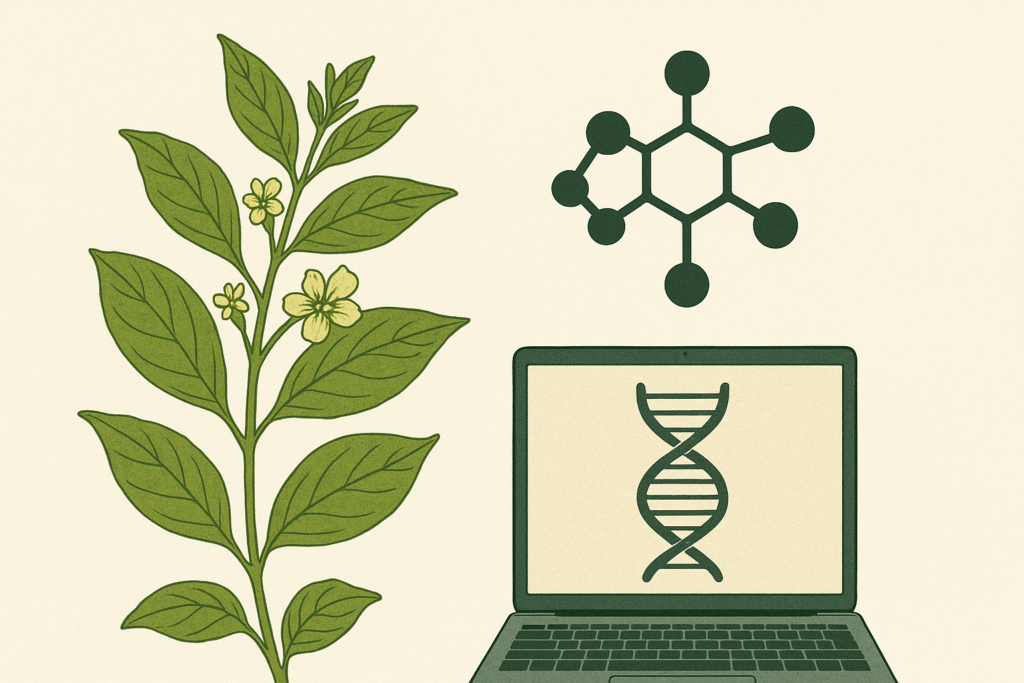
- AI-powered plant research: helping identify novel compounds and predict plant-drug interactions.
- DNA barcoding: ensuring product integrity and preventing adulteration.
- Advanced delivery systems: like liposomal or nano-formulations that improve bioavailability and patient compliance.
These tools aren’t replacing herbal knowledge; they’re supporting it. A well-prepared chamomile infusion still matters. But now we have better ways to understand why, how, and for whom it works best.
Challenges on the Path Forward
As phytotherapy evolves, so do its growing pains. Regulation remains uneven across countries. In the EU, for example, certain herbal remedies fall under the THMPD (Traditional Herbal Medicinal Products Directive), while others are considered food supplements with limited claims allowed.
Standardization is another hurdle. While practitioners value the whole-plant effect, regulators often demand pharmaceutical-style precision, which may not always reflect the herb’s natural variability.
Then there’s the ethical side: How do we ensure indigenous knowledge is respected, not exploited? The line between global sharing and cultural appropriation is fine—and vital to honour.
Integration: Where It Works Well
Some countries offer hopeful examples. In Germany, phytotherapy is routinely integrated into primary care. Swiss health insurance covers it. The WHO has launched a Traditional Medicine Strategy aiming to incorporate proven traditional practices into universal health coverage.
This movement isn’t just happening at the policy level. Patients are increasingly seeking natural, low-side-effect options. Healthcare providers, especially those in integrative and functional medicine, are responding.
Sustainability: The Root System of the Future
No future for phytotherapy can exist without sustainable sourcing. Overharvesting, climate change, and habitat loss threaten both plant species and traditional economies.
Solutions are emerging:
- Community-led cultivation projects
- Ethical wildcrafting standards
- Vertical farming and lab-grown botanicals
For practitioners and consumers alike, transparency in sourcing is no longer optional—it’s a shared responsibility.
A Living Tradition, Not a Museum Piece
The future of phytotherapy isn’t about choosing between tradition and science. It’s about weaving them together. The stories, rituals, and ancestral knowledge carry depth. The data and precision of science add clarity. Together, they form a powerful, patient-centred path to wellness.
For healthcare providers, this means staying curious and informed. For customers, it means choosing trusted sources and practitioners who honour both roots and reason. For all of us, it means seeing herbal medicine not as alternative, but essential—part of an evolving and resilient system of care.
Phytotherapy is growing. And it’s not growing alone.
REFERENCES
Heinrich, M., et al. (2020). “Best Practice in Research – Overcoming Common Challenges in Phytopharmacological Research.” Journal of Ethnopharmacology, 246, 112230.
Gangwal A, Lavecchia A. Artificial Intelligence in Natural Product Drug Discovery: Current Applications and Future Perspectives. J Med Chem. 2025 Feb 27;68(4):3948-3969. doi: 10.1021/acs.jmedchem.4c01257. Epub 2025 Feb 6. Erratum in: J Med Chem. 2025 Jul 10;68(13):14127.
Newmaster, S.G., et al. (2013). “DNA Barcoding Detects Contamination and Substitution in North American Herbal Products.” BMC Medicine, 11, 222.
Hamilton, A.C. (2004). “Medicinal Plants, Conservation and Livelihoods.” Biodiversity & Conservation, 13(8), 1477–1517.
World Health Organization (2013). WHO Traditional Medicine Strategy 2014–2023.