
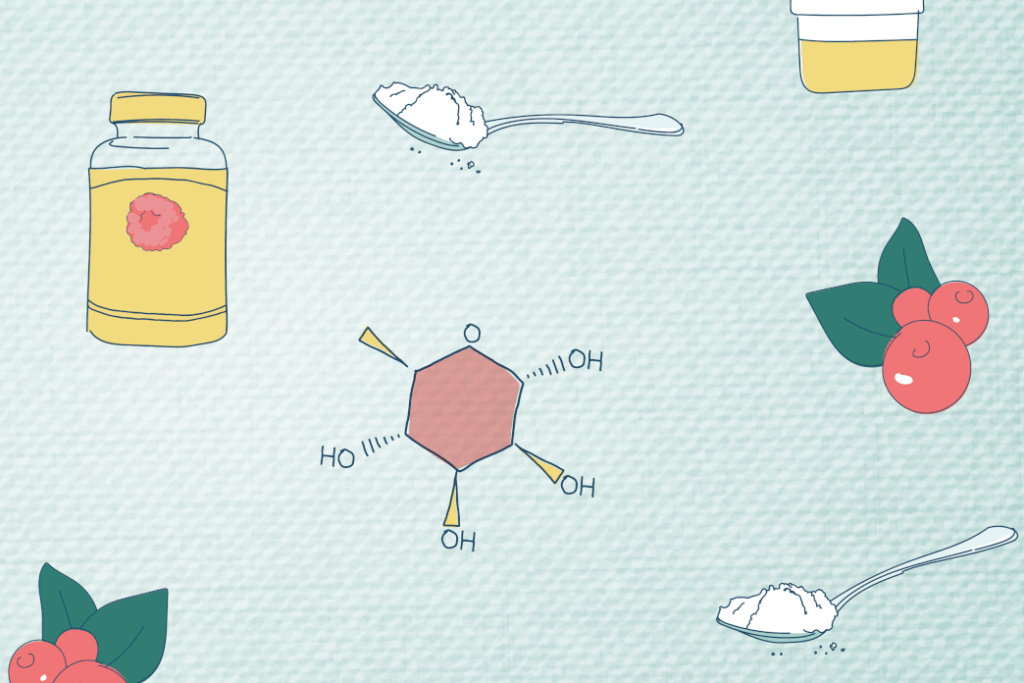
D-mannose is a kind of sugar molecule closely related to glucose. It occurs naturally in the body and we can get it from fruit & berries such as apples, oranges, peaches, blueberries, and, cranberries. But also vegetables, including green beans, cabbage, and broccoli are a common source.
So what can it do against UTIs?
Urinary Tract infections
Urinary Tract Infections are annoying and can be painful! Almost 50% of all women will suffer from a UTI at least once in their life and for many it’s a recurring issue. More than 85% of UTIs are caused by the E. Coli bacteria. And because E. coli often gains entry into the urinary tract via stool, women are particularly vulnerable for UTIs because their urethra sits close to the anus.
Once they are in the urinary tract, the E. Coli bacteria latch onto the cells, grow and cause infection.
D-mannose to treat and prevent UTIs
Research shows that, once D-mannose is taken in via food or supplements, it is metabolised by the liver and excreted via the urine. When D-mannose then passes through the urinary tract, it can attach to the E. Coli and thus prevent them from latching on to the cells of the urinary tract and cause infection. Many studies have shown that D-mannose not only reduces symptoms of UTIs, but UTIs also get resolved faster and recurring infections are occurring less frequently. What’s more, D-mannose was proven to be equally effective in treating and preventing UTIs as antibiotics.
REFERENCES
Kranjčec B, Papeš D, Altarac S. D-mannose powder for prophylaxis of recurrent urinary tract infections in women: a randomized clinical trial. World J Urol. 2014 Feb;32(1):79-84.
Domenici L, Monti M, Bracchi C, Giorgini M, Colagiovanni V, Muzii L, Benedetti Panici P. D-mannose: a promising support for acute urinary tract infections in women. A pilot study. European Review for Medical and Pharmacological Sciences. 2016; 20: 2920-2925